Is It Unsafe?
A wobbling ceiling fan is not alone annoying; it tin live downright dangerous. An unstable propeller spinning overhead tin can live unnerving for fifty-fifty the bravest somebody. But in that location are also hidden dangers when fans wobble inwards their fixtures.
A wobbling ceiling fan is a problem that volition never get meliorate on its ain, in addition to ignoring it will apace lead to more serious issues downwards the route. Let’second await at the less obvious only more than pressing dangers of wobbling fans in addition to bank check out possible causes then that yous can chop-chop solve this unsettling overhead problem.


A wobbling ceiling fan is an indication that something is incorrect. They tin can live dangerous as well as get more than and then when the wobbling is not addressed. The fan may fall, only this is rare. More dangerous is the fact that the wiring can live trapped or frayed together with excess strain on the motor tin can drive it to overheat.
Wobbling Ceiling Fans Indicate Problems
A ceiling fan is designed to be an unobtrusive appliance that quietly goes about its business organization of circulating air. However, if its smoothen rotation starts getting a lilliputian unbalanced, it tin speedily get the center of attending—for all the incorrect reasons.
The average speed for a ceiling fan is 350RPM—most 50MPH—which is a lot of forcefulness for a heavy device fitted to the ceiling. Because manufacturers empathise this, they design the fans inwards such a manner that they attach to the ceiling so securely that they are not supposed to wobble.
Now, when I order that wobbling ceiling fans are dangerous, you will likely assume it’sec because they are free inwards their ceiling fixture in addition to tin autumn out.
This is truthful only ceiling fans actually rarely fall out of ceilings. Even when they do, the wiring connections typically catch the torso of the fan so that it doesn’t really hitting the floor (or occupants of the room).
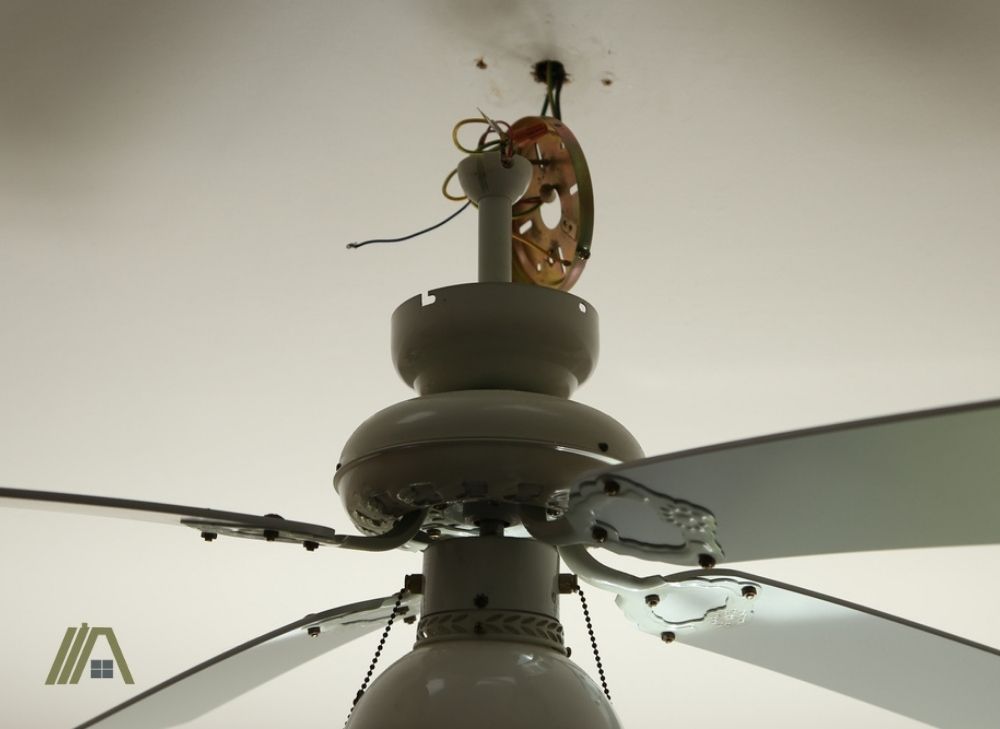
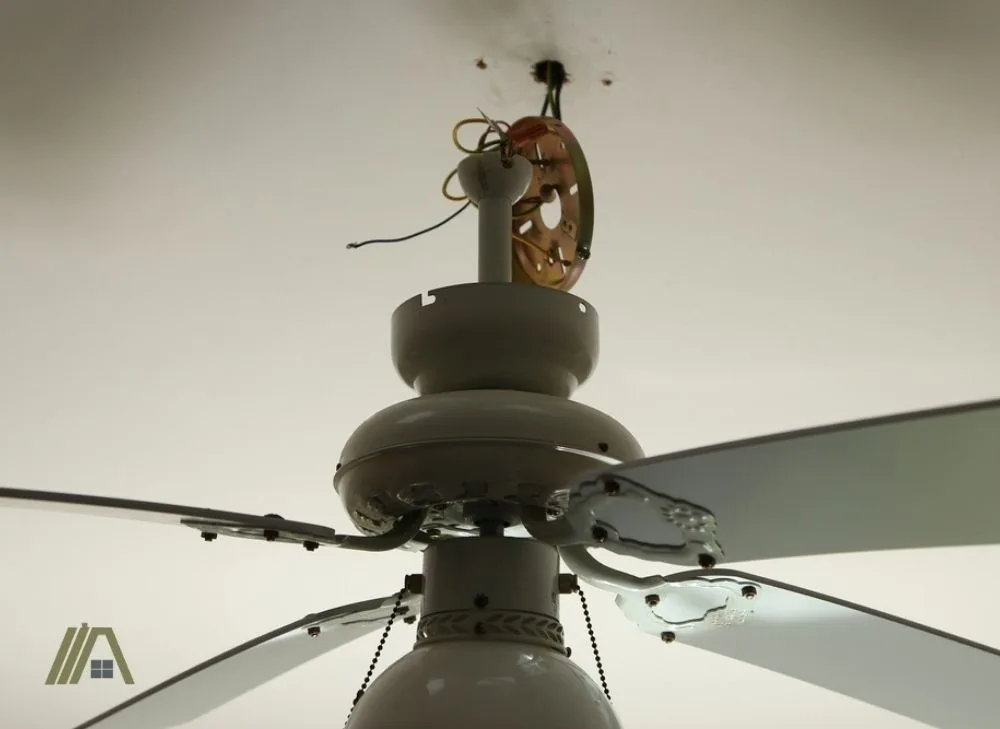
Of form, the sudden impact on the wiring tin movement harm, which may Pb to electric-based issues in addition to dangers.
Let’s act on to the hidden dangers that I’ve been hinting at.
The kickoff is that the wonky movement puts strain on the residual of the mechanism. The motor can overheat, which increases the gamble of a fire.
The moment is that the abnormal movements tin can campaign the internal wiring to be pinched, rubbed, or frayed, which tin impact the functioning of the fan or calorie-free, brusque the electric systems, in addition to crusade fires.
Causes of Wobbling Fans (too How to Fix It)
A wobbling fan needs attending, only well-nigh homeowners don’t know where to offset. Fortunately, ceiling fans are pretty basic electric appliances. By eliminating likely causes, one will unremarkably notice the faulty consequence too completely solve the job.
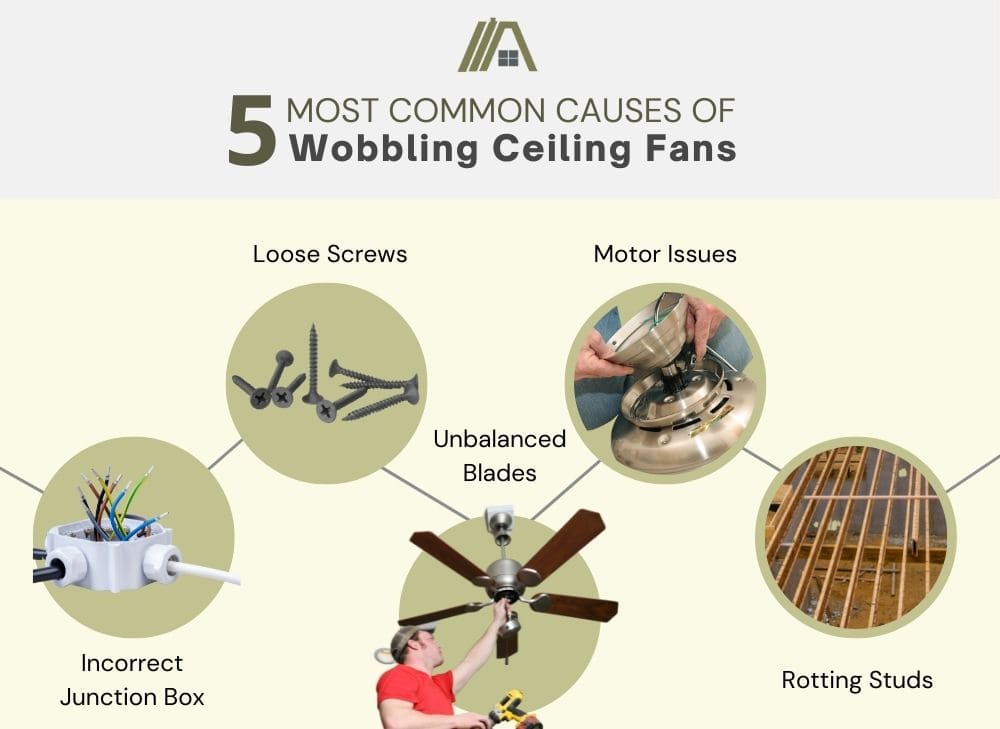
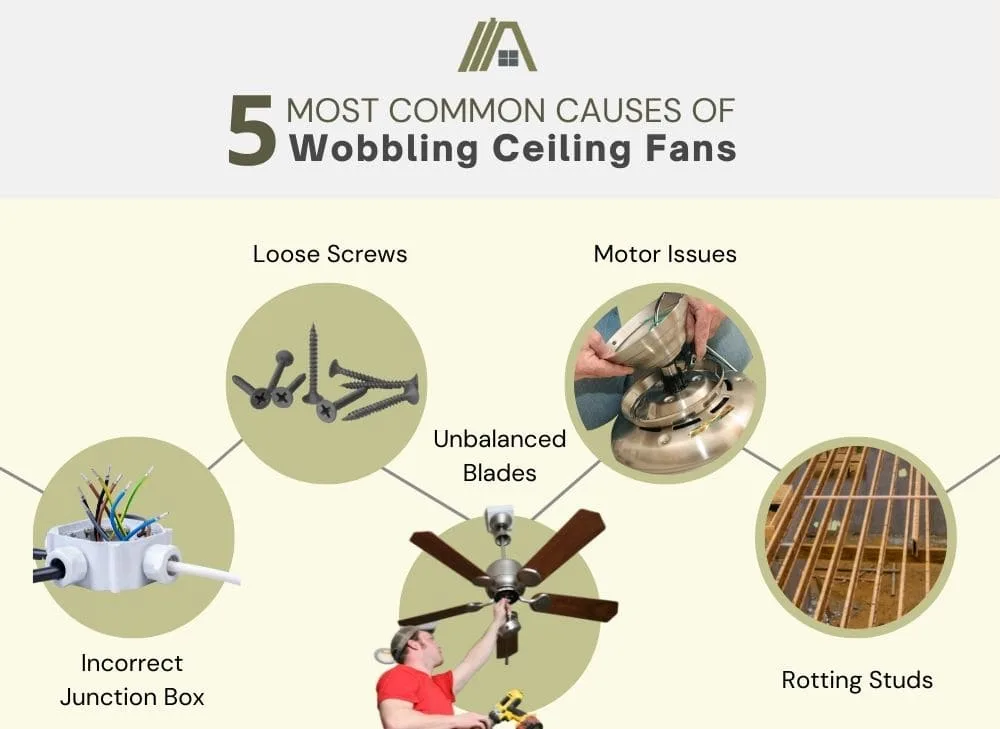
Here is a list of five of the near common causes that may campaign a wonky spin on your ceiling fan.
Incorrect Junction Box
One of the biggest causes of an unbalanced ceiling fan is using the wrong junction box. Light fixtures and ceiling fans are rattling different weights in addition to the boxes used to affix each to the ceiling volition differ.
The National Electrical Code sets around pretty specific regulations virtually the maximum weight junction boxes are supposed to be able to hold if they are to concord a ceiling fan upwards.
Firstly, if your fan weighs more than than 35 lbs, and then y'all necessitate a specific fan-rated box. It must enjoin that it is a fan-rated box too give the maximum weight that it tin hold. This should live more than than the weight of the fan because static weight exerts less strength than an object inward motility.
Secondly, your ceiling fan cannot weigh more than than 70 lbs, fifty-fifty if used with a fan-rated box.
So, if you remove a light fixture alongside no weight listed on the existing junction box, it is non rubber to assume that whatsoever size paddle fan tin can be fitted. If yous were to function an incorrectly-rated box, the fan volition non be securely attached to the ceiling together with will wobble.
Loose Screws
There are many screws involved in keeping a ceiling fan suspended overhead as well as holding the blades firmly inward place. There are besides a proficient few reasons for why they are unloose, which leads to wobbling.
- Not screwing these into place correctly or sufficiently when the ceiling fan was installed.
- Screws can besides come free amongst a wobbling fan, creating a secondary cause.
- Screws can be free because they are wrong for the task. There are many dissimilar types of screws in addition to each is improve suited to sure tasks than others.
A adept indication that the instability is linked to unloosen screws would live a clicking audio.
When checking for release screws, y'all may be tempted only to tighten up the screws holding the blades on the visible part of your ceiling fan. However, in that location are likewise screws inward the hidden portions of the fan that can be unloose.
Sometimes, screws go stripped in addition to you won’t be able to tighten them. Any screw that turns without tightening indicates that it is stripped too will involve to live replaced.
Unbalanced Blades
A mutual campaign of a wobbling ceiling fan is blades that take go unbalanced. A dip or incorrect angle on a paddle fan tin issue inward the entire setting looking like a wonky merry-go-round.
Fortunately, this problem is non tricky to decide or correct. You volition postulate a ladder, a dusting fabric, a yardstick, as well as a screwdriver.
Don’t forget to switch the fan off at the breaker box before starting your operate. It would live actually unfortunate if y'all’re upward a ladder, and soul enters the room and flicks the on-switch!
Step ane: Look at the fan from below. Can y'all run into whatsoever blades that are hanging differently from the others? All the fan blades should wait identical. If you lot come across ane that is non like the others, that is the job. You can as well turn over the blades a niggling jiggle to meet which ones are loose.
Step ii: Clean the dust off the acme of the blades. Dust builds upwards unevenly on the acme of ceiling fan blades, and it is not an surface area that many people call up to make clean regularly. Use a damp textile to wipe the acme of the fan blades.
Step 3: Check the screws where the blades are attached to the flywheel. A quick check with your screwdriver will allow you lot know if whatsoever were free. It is a good idea to routinely bank check the screws fifty-fifty if your fan isn’t visibly don’t accept a wobble.
Step 4: Measure the alignment of each blade from the same indicate on each blade to the ceiling. Take a mensuration in the eye of each blade too at the terminate. If there are any differences, gently arrange the offending border to match upwards. Just be ultra-careful to use a soft touch, so you don’t accidentally snap off a blade!
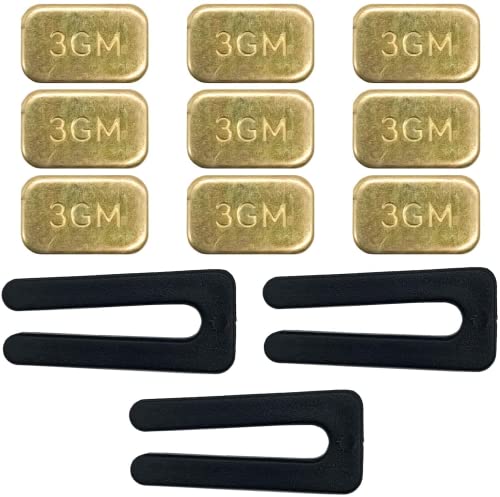
Step v: Use a balancing kit. If you lot have tried all the other steps as well as the fan blades are still unbalanced, you might take to function a balancing kit (amazon link) to get the blades to spin equally. Each kit comes with detailed instructions to make any blade remainder problems.
Motor Issues
Like all electric appliances, the motor on a ceiling fan volition eventually wear out. Most ceiling fan motors concluding for around 10 years, merely this is highly variable depending on purpose—we all know individual who runs their fan night and mean solar day (it doesn’t price much to do then)!
A ceiling fan reaching the end of its lifespan may get down to visibly shake or make irregular noises. However, just about may just postulate maintenance oiling to become them running smoothly.
Any uncharacteristic noises, jerky drive, or changes in the fan’sec power to run on all the settings is a sign that the motor may call for replacing. The motor is the powerhouse for the residue of the appliance, so whatever problems volition be noticed inwards the overall operation of the entire unit.
It is best to consult a professional person electrician if you lot suspect your fan motor is the reason for your wobbling ceiling fan.
Rotting Studs
Ceiling fans (or more specifically, the junction boxes to which they are attached) call for to live screwed into wooden joists or studs, either directly or via a ceiling fan twosome. The sparse drywall of the ceiling board is not going to back up these appliances.
However, woods is prone to deterioration over fourth dimension, especially if in that location is a job amongst wet control or even a possible termite infestation within the ceiling. If your fan is wobbling together with y'all take checked everything else, it may be worth making a trip into the attic or roof to inspect the wooden stud for any signs of rot.
In improver to possible rotting, the fixture inward that place may have been changed multiple times inward the by. The woods inwards that place where the fan is attached may be compromised because of existing holes from previous fittings. The slightest fleck of humidity that gets into damaged forest will impact how securely the junction box will remain fitted.
Sources
https://www.familyhandyman.com/projection/how-to-rest-a-ceiling-fan/#
https://www.ehow.com/how_4885871_locate-ceiling-studs.html
https://www.nachi.org/ceiling-fan-inspection.htm
https://homeguides.sfgate.com/order-existing-outlet-box-back up-ceiling-fan-65443.html
https://www.bobvila.com/articles/how-to-residue-a-ceiling-fan/


Comments
Post a Comment